

Healthy Homes is an Illusion and We Must Rethink What Goes Into the Walls We Live Between
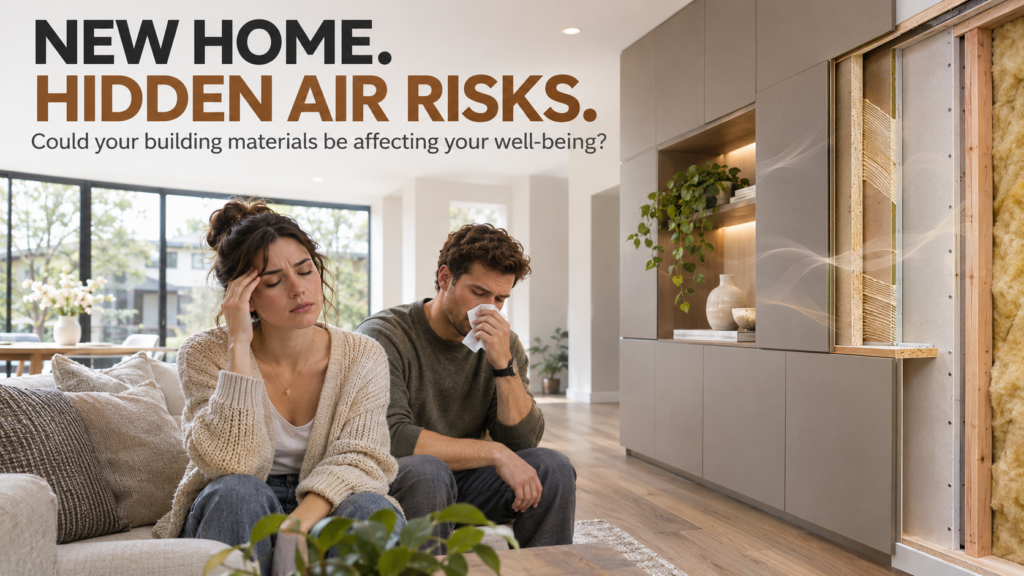
A home can be energy-efficient, carbon-conscious, and beautifully designed. But if the materials inside it compromise indoor air quality, can we seriously call it a healthy home?
By Chris Shahabi | Founder & Clean Air Advocate, Creative Oxygen Labs
We Have Built an Industry Around Green Homes. But Have We Forgotten Human Health?
For decades, the construction industry has celebrated its progress toward sustainability. We measure energy efficiency, carbon footprints, insulation performance, water conservation, and renewable energy integration.
These achievements matter. But there is an uncomfortable question that deserves far more attention:
What good is a sustainable home if the people living inside it are breathing pollutants released by the very materials used to build it?
We have become remarkably sophisticated at measuring how buildings affect the environment. Yet we have not applied the same urgency to understanding how the materials inside those buildings affect the people who occupy them.
A home should do more than protect us from the weather. It should contribute to our well-being.
And that requires us to challenge the entire building-material ecosystem.
The Chemical Problem Hidden Behind Our Walls
Consider what goes into constructing a modern home.
Paints, drywall systems, engineered wood, adhesives, insulation, flooring, cabinetry, sealants, electrical components, plumbing materials, and countless finishing products.
Each material has its own manufacturing process, chemical formulation, performance requirements, and supply chain.
The U.S. Environmental Protection Agency maintains an inventory of more than 86,000 chemical substances manufactured, processed, or imported for commercial purposes under the Toxic Substances Control Act.
That does not mean 86,000 chemicals—or even 800 toxic substances—are present in every home. But it illustrates the enormous chemical complexity of the industrial ecosystem from which our building materials originate.
Some building products release volatile organic compounds (VOCs), including formaldehyde. Others can contribute to indoor particulate pollution or introduce chemicals into household dust.
The health implications depend on the substance, concentration, duration of exposure, and vulnerability of the occupant.
The problem is not that every manufactured material is dangerous. It is that we still know too little about the combined, long-term exposure created by bringing so many different products together inside a relatively enclosed living space.
Manufacturers evaluate individual products. Builders assemble them. Regulators establish minimum standards.
But who is taking responsibility for the overall chemical environment of the finished home?
An Industry That Needs to Challenge Its Own Assumptions
The construction industry is supported by powerful manufacturing associations, trade organizations, standards bodies, and regulatory institutions.
Many perform valuable work protecting safety, ensuring product consistency, and advancing construction quality.
But established systems can also become resistant to disruption.
When billions of dollars are invested in existing manufacturing processes, supply chains, and approved materials, there are understandable commercial incentives to defend the status quo.
This raises a legitimate question: Are industry standards evolving quickly enough to incorporate new scientific discoveries and safer material technologies?
We should expect manufacturers to demonstrate not only that their products meet minimum requirements but also that they are continuously reducing unnecessary chemical exposure.
The next generation of building materials should be evaluated through a more ambitious lens:
Not simply whether they perform their intended structural or decorative function, but whether they can help create a healthier indoor environment.
When Regulation Protects Yesterday’s Technology
Regulation is essential in construction.
Buildings must be structurally sound, fire-resistant, durable, and safe. Nobody should advocate bypassing these protections.
However, regulatory systems can unintentionally discourage innovation when approval processes are slow, fragmented, expensive, or designed primarily around established materials.
An engineer may recognize the potential of a new technology but hesitate to specify it because the testing pathway is unclear, local authorities are unfamiliar with it, or certification costs are prohibitive.
This is especially challenging for smaller clean-technology companies that lack the financial resources of major manufacturers.
The solution is not less safety.
The solution is smarter regulation that evaluates new materials according to independently demonstrated performance rather than familiarity or market dominance.
Regulators, universities, manufacturers, and innovators should collaborate to establish faster, transparent, science-based pathways for validating emerging building technologies.
Innovation and public safety should reinforce each other, not compete.
Mother Earth May Already Hold Part of the Answer
Some of the most promising opportunities in material science begin with naturally occurring minerals.
Gold, silver, copper, zinc, titanium, and other mineral-based substances have attracted scientific interest for their antimicrobial, photocatalytic, and material-performance properties.
Modern chemistry and nanotechnology allow researchers to investigate how these substances behave when incorporated into coatings and building surfaces.
But natural origin alone does not guarantee safety or effectiveness. Mineral-based technologies must still be evaluated for human exposure, environmental impacts, durability, and performance under real-world conditions.
What makes this field exciting is the possibility of moving beyond passive building materials.
Imagine walls and ceilings that do more than provide color and enclosure.
Imagine surfaces engineered to resist microbial growth, support cleaner indoor environments, or perform additional functions throughout their useful lives.
That is the direction in which building-material innovation should be moving.
Turning Ordinary Walls Into Functional Surfaces
At Creative Oxygen Labs, we have been exploring this concept through Oxygen, a mineral-based paint additive designed to give conventional painted surfaces additional functionality.
Our approach incorporates zinc oxide and silver-containing mineral technology into compatible paint systems.
Laboratory testing commissioned by the company has demonstrated antibacterial activity on treated surfaces, including reported reductions of up to 99.9% against specific tested bacteria under controlled conditions.
Separate laboratory evaluations have also examined resistance to mold growth on treated materials.
These findings are encouraging along with customer use-cases that show treated walls eliminating airborne pathogens and mold can help improve respiratory health, boost immune system performance and enhance cognitive function.
That being said, the broader opportunity is compelling.
Why should the enormous surface area of a building’s walls and ceilings remain functionally passive when modern material science offers possibilities for doing more?
Oxygen represents one approach to exploring that question.
And it should only be the beginning.
The Homebuyer Deserves Better
Consider the modern luxury home.
A buyer may spend hundreds of thousands—or millions—of dollars on premium finishes, imported stone, custom cabinetry, intelligent lighting, and advanced climate control.
Yet how often does the sales presentation include a comprehensive assessment of indoor chemical emissions?
How many buyers receive documentation showing the emission characteristics of major building materials, moisture-management performance, or measured indoor air quality after construction?
We provide detailed information about energy consumption and appliance efficiency.
Why should occupants not expect similarly meaningful information about the air they will breathe?
Healthy housing should become measurable, transparent, and independently verifiable.
A genuinely healthy home should prioritize low-emission materials, moisture control, effective ventilation, appropriate filtration, and emerging technologies whose benefits are supported by reliable evidence.
The objective is not to create fear around every chemical or synthetic material.
It is to give consumers the information and choices they deserve.
Healthy Homes Should Become the New Luxury Standard
For too long, luxury in residential construction has been defined primarily by appearance, location, square footage, and finishes.
But the definition of luxury is changing.
True luxury should include the confidence that your home has been designed with your family’s health in mind.
It should mean knowing that unnecessary pollutant sources have been minimized, moisture and mold risks have been addressed, and indoor environmental performance has been considered from the earliest stages of design.
And these principles should not remain exclusive to expensive homes.
Schools, affordable housing, senior living communities, rental apartments, and everyday family homes deserve the same attention.
Clean indoor air should not be a privilege reserved for those who can afford it.
A Call for a New Building Revolution
The construction industry has already demonstrated that it can transform itself.
We have moved toward better insulation, high-performance windows, renewable energy, efficient HVAC systems, and lower-carbon construction.
Now we need another transformation.
One that places occupant health alongside energy efficiency and environmental responsibility.
That means challenging material manufacturers to innovate, encouraging regulators to embrace independently validated technologies, and giving architects, engineers, and builders the freedom to explore better solutions without compromising safety.
It also means recognizing that the buildings of tomorrow should not simply consume fewer resources.
They should actively contribute to better living environments.
At Creative Oxygen Labs, our mission is to help advance that vision—one wall at a time.
Because the future of sustainable construction should not be measured only by how little energy a home consumes.
It should also be measured by how well the home protects the people who live inside it.
And until we make that a central measure of building performance, the healthy home revolution remains unfinished.
About the Author
Chris Shahabi is the Founder and CEO of Creative Oxygen Labs, a clean-technology company developing mineral-based functional coatings intended to support healthier indoor environments. He advocates for innovation at the intersection of material science, sustainability, and human health.
chris@creativeoxygenlabs.com