
The Role of Photocatalytic Antimicrobial Wall Coatings in Reducing Airborne Contamination in Healthcare Facilities

Technical Report
Abstract
Airborne contamination within hospitals, clinics, and health and wellness centers contributes to healthcare-associated infections (HAIs), staff absenteeism, reduced productivity, patient anxiety, and prolonged recovery times. Traditional infection-control strategies rely primarily on ventilation, filtration, surface disinfection, and ultraviolet germicidal irradiation. However, passive surface technologies that continuously reduce microbial burden in occupied spaces may provide an additional protective layer.
Oxygen Additive is a zinc oxide (ZnO) nanoparticle and silver-ion (Ag⁺) infused zirconium phosphate (ZrP) based photocatalytic antimicrobial additive designed to be incorporated into conventional acrylic or latex paints. When applied to interior surfaces, the coating creates a semi-permanent antimicrobial and oxidative microenvironment capable of reducing viable microbial load on surfaces and potentially lowering airborne bioaerosol persistence.
This report outlines the potential impact of such technology on absenteeism, staff productivity, patient reassurance, recovery time, and healthcare communication.
1. Background: Airborne Contamination in Healthcare Settings
Healthcare facilities are high-density microbial environments. Pathogens may be transmitted via droplets, aerosols, or contaminated surfaces that act as reservoirs for re-aerosolization. Even with HEPA filtration and mechanical ventilation, air exchange systems cannot eliminate all airborne particulates or continuously disinfect surfaces between cleaning cycles.
Persistent microbial reservoirs on walls and ceilings are often overlooked. These surfaces represent large, continuously exposed areas capable of harboring bacteria, fungal spores, and viral particles.
Photocatalytic materials such as zinc oxide nanoparticles generate reactive oxygen species (ROS) under ambient light exposure. When combined with silver ions stabilized in zirconium phosphate, the resulting composite exhibits:
- Broad-spectrum antimicrobial activity
- Sustained ion release
- Surface contact-killing properties
- Potential reduction of viable microbial reservoirs
By reducing surface microbial burden, the probability of secondary aerosolization can be significantly reduced.
2. Clean Air and Reduced Absenteeism
Healthcare workers face elevated exposure risk to airborne pathogens. Increased microbial load correlates with higher occupational illness rates.
By incorporating antimicrobial wall coatings throughout high-contact and high-traffic areas, facilities may reduce environmental pathogen persistence. Lower background contamination may lead to:
- Reduced staff sick leave
- Decreased secondary transmission among personnel
- Improved operational continuity
Even modest reductions in respiratory illness rates can significantly impact staffing stability and healthcare system resilience.
3. Clean Air and Staff Productivity
Indoor air quality has been consistently linked to cognitive performance, focus, and fatigue. Subclinical exposure to microbial byproducts and poor air conditions and exposure to chemicals can contribute to:
- Reduced alertness
- Increased cognitive load
- Higher error probability
In high-stakes clinical environments, even small performance improvements matter. Cleaner air environments may support improved concentration, decision-making, and task execution among physicians, nurses, and allied health professionals.
4. Clean Air and Patient Reassurance
Perceived cleanliness directly influences patient confidence in care delivery. Visual cues, clean walls, modern coatings, and antimicrobial certification seals, can enhance psychological safety.
An “Oxygen SEAL” designation displayed at facility entrances may serve as a visible indicator of indoor protection. When patients feel safe within a clinical environment, measurable physiological responses may follow, including reduced stress markers and improved compliance with treatment protocols.
Psychological reassurance is not merely cosmetic; it is clinically relevant.
5. Clean Air and Faster Patient Recovery
Environmental microbial load plays a role in secondary infections and inflammatory burden. Reduced exposure to opportunistic pathogens may:
- Lower risk of post-procedure infections
- Support immune recovery
- Reduce inflammatory stress
While mechanical ventilation remains essential, adding passive antimicrobial surfaces may create a layered defense strategy. Cleaner environmental conditions may contribute to shorter recovery times and improved patient outcomes, particularly in immunocompromised populations.
6. Communication and Clinical Trust
Healthcare delivery is built on trust. Displaying a formalized environmental commitment using the Oxygen SEAL creates a tangible narrative around prevention and safety.
This seal can serve as:
- A communication bridge between administration and patients
- A differentiator for private clinics and wellness centers
- A visible demonstration of proactive AIR quality control and care
Clear messaging that walls and ceilings actively contribute to cleaner indoor environments reframes infrastructure as part of the therapeutic ecosystem.
Conclusion
Healthcare facilities require multilayered contamination prevention strategies. Photocatalytic antimicrobial coatings incorporating zinc oxide nanoparticles and silver-ion stabilized zirconium phosphate may serve as a passive, continuous adjunct to existing air purification and surface disinfection systems.
By reducing environmental microbial reservoirs, such technologies can:
- Lower staff absenteeism
- Enhance productivity
- Increase patient reassurance
- Support improved recovery outcomes
- Strengthen facility communication around safety
Today’s buildings are not neutral environments and therefore in modern healthcare centers, walls and ceilings can now evolve from passive surfaces into active contributors to patient care.
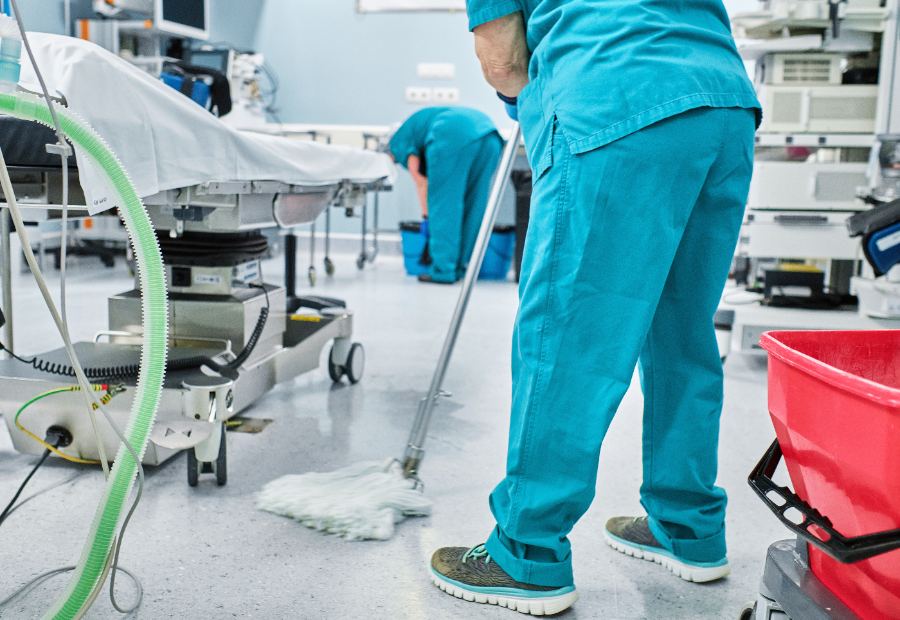
Chemicals and toxins in cleaning liquids used in hospitals have a direct negative impact on respiratory health