Transforming Natural Walls into Active Health and Sustainability Assets
The Evolution of Healthy Building Materials
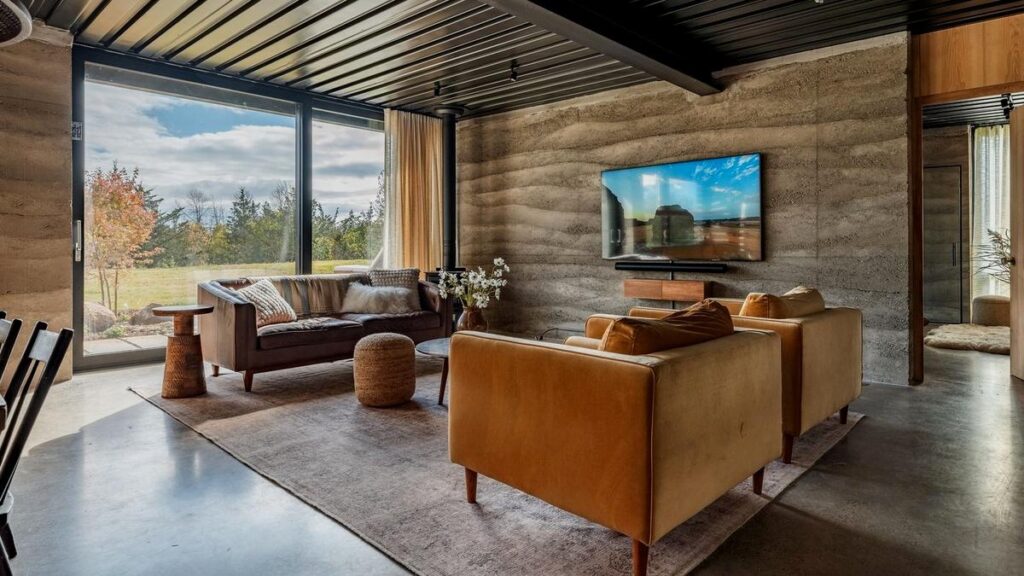
For thousands of years, rammed earth has been one of the world’s most sustainable building materials. Known for its low embodied carbon, exceptional durability, thermal mass, and natural aesthetics, rammed earth has become increasingly popular among architects, developers, and homeowners seeking environmentally responsible alternatives to conventional construction.
Today, a new generation of building science is enhancing these ancient materials. Oxygen™ Additive by Creative Oxygen Labs represents an innovative advancement that can be integrated into rammed earth finishing systems, transforming passive natural walls into active contributors to healthier indoor environments.
By combining advanced zinc oxide nanoparticle technology with sustainable earth-based construction, builders can create wall systems that support indoor air quality, occupant wellness, and long-term building performance while preserving the environmental advantages that make rammed earth so attractive.
What Is Oxygen™ Powder?
Oxygen™ is a proprietary mineral-based additive formulated with nano-engineered zinc oxide (ZnO) particles and other functional ingredients designed to enhance the performance of paints, plasters, cement and other surface coatings.
When incorporated into rammed earth finishing layers, Oxygen™ Additive creates an active wall surface capable of interacting with the surrounding environment rather than functioning solely as a structural element.
Unlike mechanical air purification systems that require electricity, filters, and ongoing maintenance, Oxygen™ works continuously as part of the wall itself.
How Oxygen™ Complements Rammed Earth
Rammed earth is already recognized for several environmental benefits:
- Low carbon footprint
- Natural humidity regulation
- Thermal mass and energy efficiency
- Minimal synthetic materials
- Exceptional durability
- Biophilic design appeal
Oxygen™ enhances these characteristics by adding environmental and health-focused functionality to the exposed wall surfaces.
Rather than replacing the natural qualities of rammed earth, it amplifies them.
The Science Behind Zinc Oxide Nanoparticles
Zinc oxide nanoparticles are among the most extensively studied functional materials in environmental engineering, antimicrobial science, and advanced construction technologies.
Their unique properties include:
Antimicrobial Performance
Numerous scientific studies have demonstrated that ZnO nanoparticles can inhibit the growth of:
- Staphylococcus aureus
- Escherichia coli
- Mold spores
- Various fungi
- Surface bacteria
The mechanism involves the generation of reactive oxygen species (ROS) at the material surface, which can disrupt microbial cell membranes and reduce biological contamination.
For residential and commercial buildings, this may help maintain cleaner wall surfaces over time.
Photocatalytic Activity
When exposed to light energy, ZnO nanoparticles can initiate photocatalytic reactions that help break down certain airborne pollutants and volatile organic compounds (VOCs).
Common VOC sources include:
- Furniture
- Flooring
- Adhesives
- Cleaning products
- Consumer goods
- Building materials
The wall surface effectively becomes an environmental catalyst capable of supporting cleaner indoor air.
Odor Reduction
Photocatalytic oxidation can also assist in reducing odor-causing organic compounds commonly found in:
- Residential spaces
- Commercial offices
- Hospitality environments
- Veterinary clinics
- Fitness facilities
- Senior living communities
UV Stability
ZnO is widely used in advanced coatings because of its excellent ultraviolet protection properties.
This helps preserve the appearance and durability of natural mineral finishes commonly used in rammed earth construction.
Why Surface Integration Is Critical
One of the most important scientific considerations is where Oxygen™ is applied.
The greatest functional performance occurs when Oxygen™ is incorporated into:
- Clay-lime plasters
- Mineral skim coats
- Earth-based finish layers
- Surface treatments
Applying Oxygen™ to the outer surface of the wall maximizes exposure to:
- Indoor air
- Light
- Airborne contaminants
- Moisture fluctuations
This allows the active ingredients to perform their intended functions more effectively than if they were buried deep within the structural earth mass.
Enhancing Indoor Environmental Quality
Modern sustainability standards increasingly recognize that healthy buildings are just as important as energy-efficient buildings.
Organizations and certification programs now place greater emphasis on:
- Indoor air quality
- Occupant wellness
- Environmental health
- Exposure reduction strategies
Oxygen™ supports these objectives by contributing to:
Cleaner Air
Active wall surfaces may help reduce concentrations of certain airborne contaminants through continuous passive interaction with indoor air.
Reduced Surface Microbial Activity
Antimicrobial wall surfaces can contribute to cleaner interior environments in both residential and commercial settings.
Reduced Dependence on Mechanical Solutions
Because Oxygen™ functions passively within the building envelope, it does not require:
- Electricity
- Motors
- Fans
- Filters
- Ongoing maintenance
This aligns with sustainable design principles focused on simplicity and durability.
Value for Residential Projects
Homeowners increasingly seek properties that support health, wellness, and environmental responsibility.
Combining rammed earth with Oxygen™ technology can provide:
- Health-focused living environments
- Reduced reliance on synthetic materials
- Improved indoor environmental quality
- Sustainable design differentiation
- Enhanced property appeal
- Long-term durability
For families concerned about indoor air quality, the integration of active wall technology offers a unique value proposition that extends beyond aesthetics alone.
Value for Commercial Buildings
Commercial developers are increasingly competing based on occupant experience and environmental performance.
Oxygen™-enhanced rammed earth systems can support:
- Wellness-focused office environments
- Sustainable hospitality projects
- Educational facilities
- Healthcare-adjacent buildings
- Senior living communities
- Mixed-use developments
These benefits can contribute to stronger ESG positioning, sustainability reporting initiatives, and wellness-oriented building certifications.
Supporting Sustainable Architecture
Sustainability is no longer measured solely by energy efficiency.
Leading architects now evaluate buildings using a broader framework that includes:
- Human health
- Material transparency
- Environmental impact
- Occupant wellbeing
- Long-term resilience
Rammed earth already delivers exceptional environmental performance through low embodied carbon and material efficiency.
Oxygen™ adds a complementary layer of environmental functionality by transforming wall surfaces into active participants in maintaining healthier indoor spaces.
The Future of Healthy Building Envelopes
The next generation of sustainable construction will move beyond passive materials toward intelligent surfaces that actively improve the environments in which people live, work, learn, and heal.
The combination of rammed earth and Oxygen™ Powder represents a convergence of ancient building wisdom and modern material science.
Together, they create a wall system that is not only sustainable and beautiful but also capable of contributing to cleaner indoor air, healthier living conditions, and more resilient buildings.
As architects and developers seek innovative solutions that align environmental responsibility with human wellness, Oxygen™ provides a powerful enhancement to one of humanity’s oldest and most sustainable building materials.
If you have a construction project using Rammed Earth … Contact us