

Why Big Cities and BIG Buildings are making us SICK
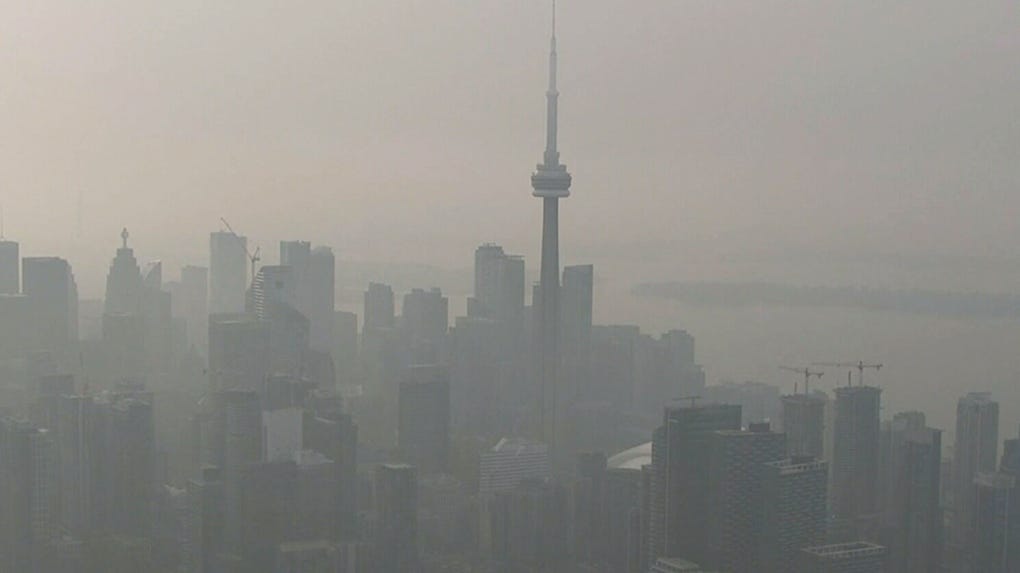
Even though the global percentage of land covered by concrete, asphalt, and dense urban fabric is less than 2% of the earths surface, it is more than enough to create serious air contamination locally, especially in mega cities. This is one of those cases where averages hide reality.
Here’s why the impact is real and significant.
First, exposure is concentrated, not evenly distributed. Over 55% of the world’s population now lives in urban areas, and that number rises above 80–90% in many developed regions. Humans aren’t spread across forests, deserts, or oceans; they’re clustered in places where impervious surfaces, buildings, vehicles, and industrial activity are densest. So, while cities may cover ~2% of land, they host the majority of human exposure to pollution.
Second, urban materials actively worsen air quality rather than being neutral. Cement, asphalt, and concrete contribute to pollution in several ways:
- They trap heat (urban heat island effect), raising temperatures by 1-7°C compared to surrounding areas. Higher temperatures accelerate chemical reactions that form ground-level ozone and secondary pollutants.
- They reduce natural filtration by replacing soil, vegetation, and microbial ecosystems that would otherwise absorb pollutants.
- They accumulate and re-emit toxins. Road dust, tire particles, brake wear metals, and volatile compounds settle on hard surfaces and are repeatedly resuspended into the air by wind and traffic.
Third, mega cities act like pollution basins. Tall buildings reduce airflow, creating “street canyons” where pollutants linger instead of dispersing. In cities like Delhi, Beijing, Los Angeles, New York, Mexico City, or Tehran, this leads to persistent pollution layers that residents inhale daily. The issue is not how much land is paved globally, it’s how effectively pollution is trapped where people live.
Now to the health side, which is well established.
Air contamination in dense urban environments has direct, measurable impacts on vital organs:
- Lungs: Fine particulate matter (PM2.5 and smaller) penetrates deep into lung tissue, causing inflammation, reduced lung capacity, asthma, chronic obstructive pulmonary disease (COPD), and increased infection risk.
- Heart and blood vessels: Ultrafine particles enter the bloodstream, increasing oxidative stress, thickening blood, raising blood pressure, and accelerating atherosclerosis. This directly raises the risk of heart attacks and strokes.
- Brain: There is growing evidence that air pollution contributes to cognitive decline, increased dementia risk, impaired child brain development, anxiety, and depression. Some particles can cross the blood-brain barrier.
- Immune system: Chronic exposure weakens immune response, increases systemic inflammation, and makes individuals more vulnerable to respiratory viruses and long-term disease.
- Liver and kidneys: These organs filter toxins from the blood and show higher disease burden in populations exposed to long-term air pollution.
Importantly, there is no safe threshold for many urban air pollutants. Health impacts increase even at levels below many regulatory limits.
Another key point: duration matters more than size. Living 20–40 years in a polluted urban environment produces cumulative damage. This is why air pollution is now linked not just to respiratory illness but to shortened life expectancy, reduced productivity, and long-term chronic disease.
So, if you are asking whether air pollution and airborne contamination have a direct impact on our health and wellness in mega cities, the scientifically backed answer is unequivocally yes, because pollution is:
- concentrated where people live,
- amplified by urban materials and design,
- trapped by dense infrastructure,
- and inhaled continuously over long periods.
The health impact is not hypothetical. It is systemic, multi-organ, and already documented across populations worldwide.
So now the next logical question that needs to be answered is this, can indoor air in such urban environments (big cities) be significantly more polluted than outdoor air and why?
1. Air stagnation and limited ventilation
Most people in cities spend 85-90% of their time indoors. Modern buildings, especially high-rise apartments and office towers, are designed to be energy-efficient, which often means tightly sealed envelopes with minimal natural airflow. While this reduces energy loss, it also traps airborne pollutants, dust, VOCs, CO₂, and microbes allowing them to accumulate to concentrations higher than outside. Even in cities with relatively clean outdoor air, indoor stagnation can make pollution exposure worse.
2. Off-gassing from building materials
Materials commonly used indoors, paints, adhesives, varnishes, flooring, particleboard, insulation, and sealants emit volatile organic compounds (VOCs) and semi-volatile organic compounds (SVOCs). These chemicals include formaldehyde, toluene, and xylene, which can persist for years after installation. Over time, even low-emission materials contribute to chronic indoor chemical exposure.
3. Particulate matter generation and resuspension
Indoors, dust and fine particles are constantly generated from human activity (walking, cleaning, cooking), furnishings, and shedding fibers. These particulates accumulate more rapidly indoors because ventilation is limited and surfaces like floors, carpets, and furniture act as reservoirs. Without proper cleaning, these particles resuspend into the air repeatedly, carrying microbes, allergens, and chemical adsorbates.
4. Microbial growth on surfaces
High humidity, poor airflow, and organic residues create ideal conditions for mold, bacteria, and dust mites. These organisms not only affect surfaces but release spores, endotoxins, and microbial volatile organic compounds (MVOCs) into the air, further elevating indoor pollution levels. Buildings with dense materials, such as drywall, laminated panels, and carpets, can become persistent microbial reservoirs if not treated or designed for antimicrobial activity.
5. Chemical interactions with indoor surfaces
Indoor materials can act as sinks or sources for pollutants. For example:
- Particles and VOCs can adsorb onto walls, ceilings, and furnishings, then later desorb back into the air.
- Indoor oxidants (like ozone from air purifiers or outdoor air infiltration) can react with these adsorbed chemicals to generate secondary pollutants, sometimes more toxic than the originals.
6. Why materials matter as much as outdoor air
Given the above, the type of building material directly affects both the quantity and quality of indoor pollutants. Materials that:
- Release fewer VOCs
- Resist microbial colonization
- Adsorb or catalytically degrade harmful compounds
can substantially reduce indoor pollution, in some cases more effectively than outdoor air quality improvements alone. Essentially, walls, ceilings, floors, and coatings are not passive, they interact with the air and determine the indoor chemical and biological environment. In dense cities where outdoor air is already polluted, using “smart” or reactive materials indoors becomes critical to protecting human health.
Bottom line: Indoor air pollution in urban buildings is often worse than outdoor air because of poor ventilation, chemical off-gassing, particulate accumulation, microbial growth, and reactive surface interactions. Materials are no longer just structural, they are active players in indoor environmental health, making material selection and design as important as controlling outdoor pollution.